Introduction
The conventional wisdom for boaters has long been: "Lithium for trolling motors, lead-acid for starting." As of 2026, that paradigm is shifting dramatically. Demand for LiFePO4 batteries to crank marine engines is soaring, driven by boaters' desire to ditch heavy, short-lived AGM batteries.
The short answer is yes, LiFePO4 can be used for cranking. The complete answer: it must be the right battery.
This guide explains why standard deep-cycle lithium batteries are unsuitable for engine starting and details the essential features of a true marine-starting LiFePO4 battery.
The Problem: Why Standard LiFePO4 Batteries Fail at Engine Cranking
Starting a marine engine demands a massive, instantaneous power surge—measured as Cold Cranking Amps (CCA). This is where standard LiFePO4 batteries fall short.
-
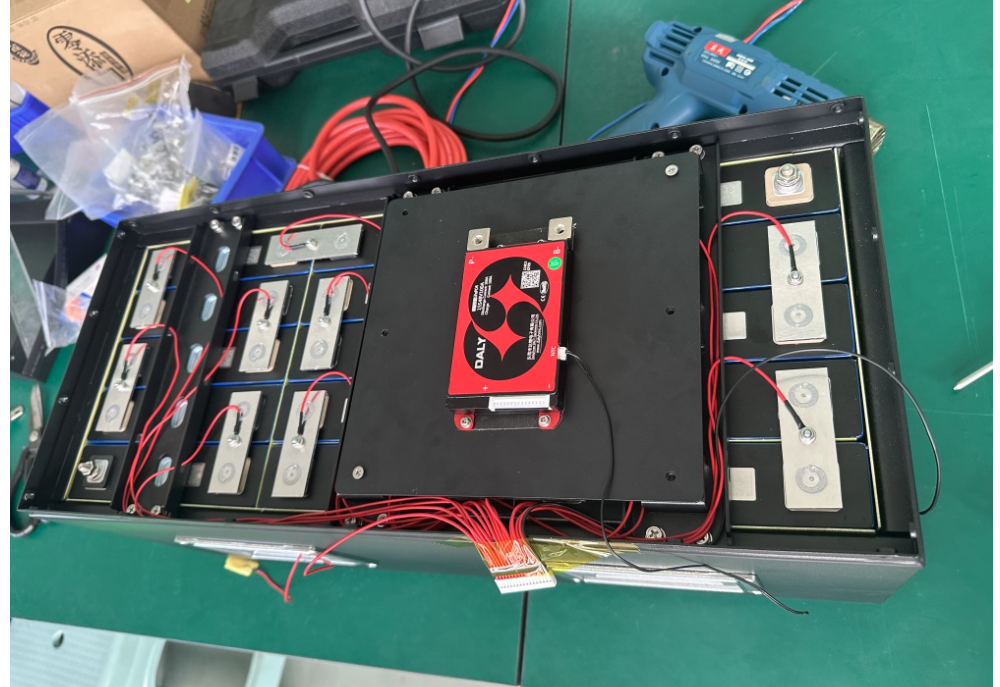
The BMS Limitation: Most standard "Deep Cycle" LiFePO4 batteries feature a Battery Management System (BMS) designed for sustained, moderate discharge (e.g., powering a trolling motor). When an outboard demands a 300-500A instant surge, a standard BMS interprets this as a fault and shuts down to protect the cells, resulting in a failure to start.
-
The Core Issue: While lithium chemistry inherently maintains voltage better than lead-acid under load, the restrictive current limits of a standard BMS are the primary barrier, not the cell capability itself.
3 Compelling Reasons to Switch to Lithium for Cranking
Overcoming the initial challenge unlocks significant advantages:
-
Substantial Weight Savings: Replace a 75-pound Group 31 AGM battery with a ~25-pound LiFePO4 equivalent. Reduced weight directly improves fuel efficiency, acceleration ("hole shot"), and allows for shallower running.
-
Stronger Starts with Higher Voltage: LiFePO4 batteries maintain a higher nominal voltage (~13.2V vs. ~12.6V for lead-acid), delivering more power to the starter motor for quicker, more reliable engine ignition.
-
Exceptional Service Life: A quality marine cranking lithium battery can last 3,000-5,000 cycles, far exceeding the typical 500-cycle lifespan of an AGM, representing a superior long-term value.
How to Select the Right LiFePO4 Cranking Battery
Choosing correctly is paramount. Avoid basing your decision on price alone. Insist on these three critical specifications:
-
High-Surge-Capable BMS: You must select a battery explicitly designed and marketed as a "Starting" or "Dual Purpose" battery. These incorporate a heavy-duty BMS capable of delivering Peak (Pulse) Discharge Currents of 500A to 800A for 3-5 seconds. Always check the specification sheet for the "Max Surge" or "Pulse Discharge" rating.
-
Verified CCA Equivalency: While rated differently, reputable LiFePO4 manufacturers provide an "Equivalent CCA" rating. This number must meet or exceed your outboard motor's CCA requirement (found in your engine manual).
-
Robust Waterproof Construction (IP67): The marine environment is punishing. Choose a battery with a sealed case rated IP67 or higher to protect the sensitive internal BMS and cells from saltwater spray, moisture, and corrosion.
A Vital Consideration: Charging System Compatibility
A key consideration when using a LiFePO4 cranking battery is your engine's alternator. Lithium batteries accept charge very rapidly due to low internal resistance. This can cause older or standard marine alternators to overheat and potentially fail, as they are not designed for such a load.
-
The Recommended Solution: For many installations, especially with older outboards, using a DC-DC Charger is strongly advised. This device manages the charge current from the alternator, protecting both the charging system and your battery investment.
Conclusion: Making the Switch
If you're ready to stop replacing heavy batteries every few years and want to save significant weight, a properly specified LiFePO4 marine cranking battery is a transformative upgrade. Ensure a successful installation by focusing on three key points:
-
Confirm the BMS has a high surge-current rating.
-
Match the battery's equivalent CCA to your engine's needs.
-
Evaluate and, if necessary, protect your alternator.
Ready to power your next launch?
Welcome to contact us:
Inquiry more product details from the : Lithium Ion Battery Manufacturers
WhatsApp/Wechat/Mobile: +86 14704451321
Email: support@szxhbattery.com
Website: www.szxhbattery.com
Ready to power your energy systems with the best in the industry?
Contact us today to get the latest pricing and discuss your needs with our team!